Work in France as a UK techie: the four key routes

Spotted an IT role in Paris or Lille? Since Brexit, you'll likely need a permit or visa first. But a 90-day exemption, an Irish link, or portage salarial — which eases French clients’ anxiety — could each smooth the way.
UK technologists eyeing IT roles in France, like this Île-de-France-based data role or this hybrid FinOps role in Paris, may come to find that the job is more than a mere few clicks away. Even the hybrid opportunity, which might sound easier for British nationals to undertake, is likely to be no exception.
That’s because since Brexit (when the UK formally left the EU on Jan 31st 2020), UK citizens are classed as “non-EU nationals.” In 2026/27, most paid work in France if you’re a Brit techie requires official work authorisation, writes Kevin Austin, managing director of Access Financial, which has specialised in facilitating compliant overseas UK contractor placements for 22 years.
Britons need a “long-stay visa” for France-based IT contracts running beyond 90 days. So Free-Work users should be sure to check the top right-hand of the job description — this Lille-based Lead Test vacancy shows it’s a “1-year renewable” contract, for example.
Nonetheless, France still offers four main routes for UK IT contractors:
Secondment/ICT: a UK employer posts you to France, with Intra-Company Transfer (ICT) permits lasting up to three years.
Passeport Talent/Blue Card: a multi-year permit, suited to temporary IT contracts likely to roll over.
Intérim/CDD: IT recruiters you’ll know from the UK can sponsor you, but rarely do for newcomers.
Portage salarial: the client is yours, and the portage firm employs you and handles payroll.
What’s the typical route for a Brit IT contractor to work in France?
Secondment and the Passeport Talent are typical starting points for UK IT contractors without French working rights. Intérim and portage usually depend on already holding valid French working rights or a residency card. But there may be no need to utter “Sacré bleu.” Alongside these four main routes to work in France as a UK tech worker, there are a few helpful exceptions that may work in your favour, relating to work permits and Irish citizenship.
First, though, those four main routes to work in France as a UK techie:
1. Secondment/ICT
Secondment is the simplest route: a UK employer or client sends you to France. A British business can post you to deliver a specific client contract, or transfer you to its French branch on an Intra-Company Transfer permit lasting up to three years. Because the UK employer handles most of the immigration paperwork, this route saves you considerable hassle.
2. Passeport Talent/Blue Card
The Passeport Talent is a multi-year residence permit for skilled professionals. It covers qualified employees, EU Blue Card holders (who face higher salary thresholds), startup founders and artists. The Blue Card/Passeport Talent is too involved for a brief six-week tech assignment, but it’s suitable for contract IT work likely to roll over into long-term work.
3. Intérim/CDD
Recruitment agencies can legally apply for a French work permit on your behalf, but they rarely make such applications for newcomers. That’s mainly because the permit is tied to a specific job, and local candidates are considered first.
France has a massive temporary staffing (intérim) market, led by IT recruiters who Brits will be familiar with — Adecco, Manpower and Randstad. There’s also a decent-sized pool of standard fixed-term contracts (‘CDD’), offered directly by employers and through agencies.
In practice, though, the temporary agency and fixed-term contract route works best if you already hold valid French working rights or a residency card.
4. Portage salarial
Portage salarial, France’s closest equivalent to a UK umbrella company, combines freelance autonomy with full employee benefits.
You find the client and set your rate, then the portage firm (the umbrella company, in effect) employs you. The portage firm runs French payroll and provides standard employment protections.
Portage salarial is widely used by management and IT consultants, partly because it removes legal anxiety for French clients hiring independent talent from the UK.
Portage usually requires existing French working rights. Some portage firms will support a Passeport Talent or EU Blue Card application, but that typically needs:
a contract of at least 12 months
a degree or equivalent experience
a salary above the Blue Card threshold (€59,373 gross a year in 2026), which rises every year.
Do UK IT contractors need a French work permit for short assignments?
No, not for audit or expert missions of up to three months in IT, management, finance, insurance, engineering or architecture, provided a foreign employer formally posts you.
French labour law waives the work permit for salaried assignments of up to three months in seven listed fields. Besides audit and expert missions, these are:
sporting, cultural, artistic and scientific events
conferences, seminars and trade fairs
film, audiovisual, stage and music production
modelling
household staff accompanying their employer
occasional teaching by invited lecturers.
The exemption covers only these fields, so it does not let freelance contractors from the UK take other work while visiting as a tourist.
What about seasonal work and youth mobility?
France’s ski resorts, vineyards and summer campsites rely on seasonal worker permits (travailleur saisonnier). Seasonal worker permits can last up to three years, but cap work at six months a year.
If you’re seeking a break from the IT department, focus on larger resort groups and French-owned operators already set up to sponsor foreign staff. Note that the winter ski-resort recruitment happens during spring and summer.
The UK and EU are also negotiating a reciprocal youth experience scheme, likely to be for 18 to 30-year-olds, but it is not yet open. Talks in 2026 remain ongoing over participant caps and tuition fees, so we advise checking the scheme’s status before pursuing more complex permits.
What else should UK IT contractors know before working in France?
End-of-contract pay boost: Finishing a CDD or intérim contract typically brings a 10% end-of-contract payment (prime de précarité), plus roughly 10% in accrued holiday pay. That can lift total gross pay nearly 20% above base wages, though employee social contributions of roughly 20–23% still apply. The prime de précarité does not apply to seasonal contracts (CDD saisonnier) unless an industry’s collective agreement requires it.
Check your family tree for an Irish link: If a parent of yours was born in Ireland, you are already an Irish citizen and can apply for an Irish passport, which gives you full EU working rights. If the link is through a grandparent, you must first enter the Foreign Births Register, which can take a long time, so apply early.
Work with (and not against) the hiring calendar: Hiring peaks at la rentrée — the annual return to school — in September, and also in January, whereas August, by contrast, is largely quiet.
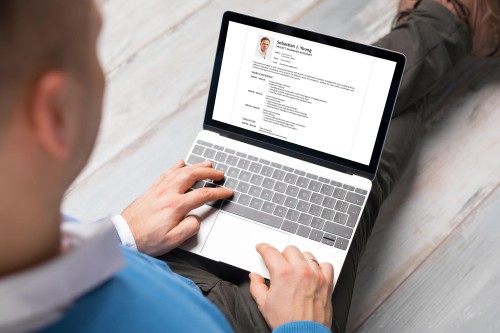
Adapt your CV application: To be safe, keep your CV for French tech roles to one page and pair it with a formal cover letter (lettre de motivation). France’s IT staff employers increasingly treat a headshot as optional. Job boards worth bookmarking include APEC (management and professional roles), France Travail (general vacancies), Welcome to the Jungle (tech and startups), and Free-Work’s French-language IT/Tech job listings.
Respect Schengen limits: Visitors to France (and the wider Schengen area) can stay a maximum of 90 days — the standard tourist allowance — in any rolling 180-day period. The EU’s Entry/Exit System, launched in October 2025 and fully rolled out since April 2026, records every entry and exit biometrically. Working informally on a tourist entry is illegal and easily flagged.
Which route to work in France suits UK tech contractors best?
For most UK tech contractors and other skilled British freelancers, the most straightforward route to work in France is a secondment or an appropriate work visa, then a move into France’s umbrella company equivalent — portage salarial. As immigration policies evolve, always verify current requirements on the official France-Visas portal before finalising any contract, and consult a specialist adviser if in doubt.
Kevin Austin is the co-founder and managing director of Access Financial, a firm specialising in global employment, international umbrella solutions, and overseas contracting advisory services. A seasoned expert in international taxation, immigration, and cross-border compliance, Kevin regularly contributes technical analysis and guidance on working abroad, foreign social security rules, and global corporate mobility. Kevin holds extensive professional credentials as a chartered accountant, including designations as a Fellow of the Institute of Chartered Accountants in England and Wales (ICAEW) and the Association of Chartered Certified Accountants (ACCA). Throughout his career, Kevin has focused on helping contractors and multinational recruitment agencies navigate overseas regulatory landscapes and manage cross-border employment risks.



Comment
Log in or create your account to react to the article.