Making Tax Digital for Income Tax: what must self-employed IT workers do?

Individuals who work for themselves in IT and other key sectors with an income of £50,000 must now ‘go’ digital. Almost all other sole trader techies must await the phase-in.
If you’re self-employed, and that includes IT job board users who operate as sole traders, you may have heard of Making Tax Digital for Income Tax Self-Assessment (MTD ITSA).
Here’s a key question, as MTD for Income Tax arrives:
But do you know what MTD for income tax (as it’s often shortened to) means for you, and your obligations to HMRC?
Here, exclusively for Free-Work, I will reveal what you need to know about MTD ITSA and how to reflect the changes, effective from 2026/27, which commenced on April 6th 2026, writes Laura Cumins, a technical officer at the Low Incomes Tax Reform Group (LITRG).
What is Making Tax Digital for Income Tax Self-Assessment (MTD ITSA)?

MTD for income tax is a new system from HMRC for recording and reporting your income and expenses if you are self-employed.
For those affected, such as sole traders, it replaces the current annual Self-Assessment process.
What are three MTD requirements if self-employed?
Under the new rules tied to MTD ITSA, you will be required to:
Use compatible commercial software to keep digital records
Submit quarterly updates to HMRC — these are short summaries of your business income and expenditure
Submit an annual year-end tax return using your MTD software.
Can MTD ITSA apply to the self-employed, potentially on two fronts?

If your business is VAT registered, you will already be using MTD for VAT to file your VAT returns (unless you are exempt).
MTD for income tax is a similar but separate reporting regime, meaning you may need to comply with both sets of HMRC rules.
Helpfully, the due dates for paying your tax to HMRC remain the same.
What is qualifying income for MTD?
MTD for income tax only applies to individuals with self-employed, sole trade incomes and/or property income — this is called your “qualifying income.”
Making Tax Digital does not currently apply to partnerships, but it is expected to be rolled out to them at a future (still undetermined) date.
Do all sole traders now need to go digital?
In the first year of MTD for income tax (2026-27), only self-employed individuals with gross income of more than £50,000 from qualifying income sources will have to comply.
This gross income from a sole trade will be based on the figures included on your 2024/25 tax return.
Which self-employed sole traders does MTD apply to, and from when?
MTD is being phased in over three years, with the threshold reducing to £30,000 from April 2027(based on your 2025/26 tax return) and to £20,000 from April 2028 (based on your 2026/27 tax return).
If you have only recently started sole trading (or receiving property from income) and have no other qualifying income, you will not have to comply with the requirements of MTD ITSA straight away, as you will have to file one tax return under the current Self Assessment regime before you are required to join MTD.
Do company directors have to do MTD?

If your self-employed trade is through a limited company, MTD won’t apply to you unless you also have another source of qualifying income. For example, if you are a company director but also have rental properties, PAYE income and dividend income are not qualifying income sources for MTD.
Limited company directors will continue to submit their annual Self-Assessment personal tax returns as they do now.
How to know if MTD applies to me?
Your first step should be to determine whether MTD will apply to you. This means looking at your gross income from self-employment and/or property (before expenses) for 2024/25 to check if it was above £50,000.
If you have completed and filed your 2024/25 tax return, you may have received a letter from HMRC telling you that you may need to use MTD. If you identify that MTD will apply to you, but you haven’t received a letter from HMRC, you should still get prepared and sign up, as HMRC won’t sign you up automatically.
The sign-up page on .gov for self-employed sole traders, entitled “Sign up for Making Tax Digital for Income Tax,” is here.
Best MTD software for sole traders? Do shop around…
Once you know MTD applies to you, you should also investigate the software options.
You might be using software already to track your income and expenses — you should check that this is compatible with MTD for income tax.
Can sole traders still use spreadsheets under MTD from 06/04/26?
You can still use spreadsheets to maintain your accounting records, but you will then need “bridging software,” which converts your data into a format that can be submitted to HMRC using a digital link.
HMRC has an online tool on the .gov website that can help you choose software that is right for your circumstances. This official MTD “software finder tool” is here.
Can HMRC recommend MTD software to the self-employed?
However, HMRC won’t be able to recommend a particular software provider.
There is the option to apply for an exemption from MTD ITSA, however, if you fall into one of the exempt groups.
Are individual MTD exemptions available?
Some categories of taxpayers are automatically exempt, either temporarily or permanently.
You can also apply for an exemption if, as the taxman says, you “genuinely cannot use digital tools” — not that many Free-Work users will likely be able to make such a claim!
The takeaway
As we say on our MTD hub, the extension of Making Tax Digital for income tax represents a “major change” for some self-employed individuals (and property landlords). And by “some,” we mean at least 860,000 people! HMRC also rightly says on this page, if you’re one of them, “Act Now.”
Written by
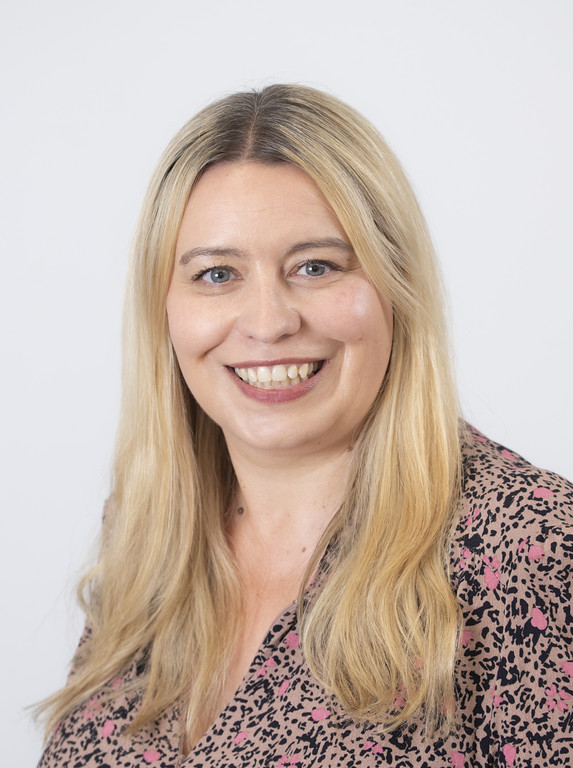
Laura Cumins
Laura Cumins is a chartered tax adviser and technical officer at The Low Incomes Tax Reform Group (LITRG). Laura studied law at university and has spent most of her career in practice, working in the private client team of a 'Big 4' accountancy firm, and more recently leading the personal tax department at a large Scottish law firm. Laura joined LITRG in 2025. Her main areas of interest are self-employment issues (including Making Tax Digital), trusts, and estates.



Comment
Log in or create your account to react to the article.